Updated July 2026.
Here is a number that should bother you. A homeowner with a leaking roof or a flooded basement does not fill out one form. They fill out three or four, then they sit there with the phone in their hand and wait. The first contractor to call back gets the conversation. Everybody else is calling back into a job that is already being scheduled with someone else.
It is not the cheapest quote that wins. It is not the best reviews. It is the one who picks up the phone first. And most contractors are losing that race before they even know the lead exists, because the form notification is sitting unread in an inbox they check at the end of the day.
This is the single highest-leverage fix in most contractor businesses, and almost nobody does it well. Let me break down why it matters this much and what actually moving fast looks like.
The Data on Lead Response Time Is Brutal
The research on this has been consistent for over a decade and it is not subtle.
The odds of qualifying a lead drop off a cliff after the first 5 minutes. A lead contacted within 5 minutes is dramatically more likely to convert than one contacted at 30 minutes. By an hour, you are most likely calling someone who has already talked to a competitor. By the next day, you are calling someone who has already booked the job.
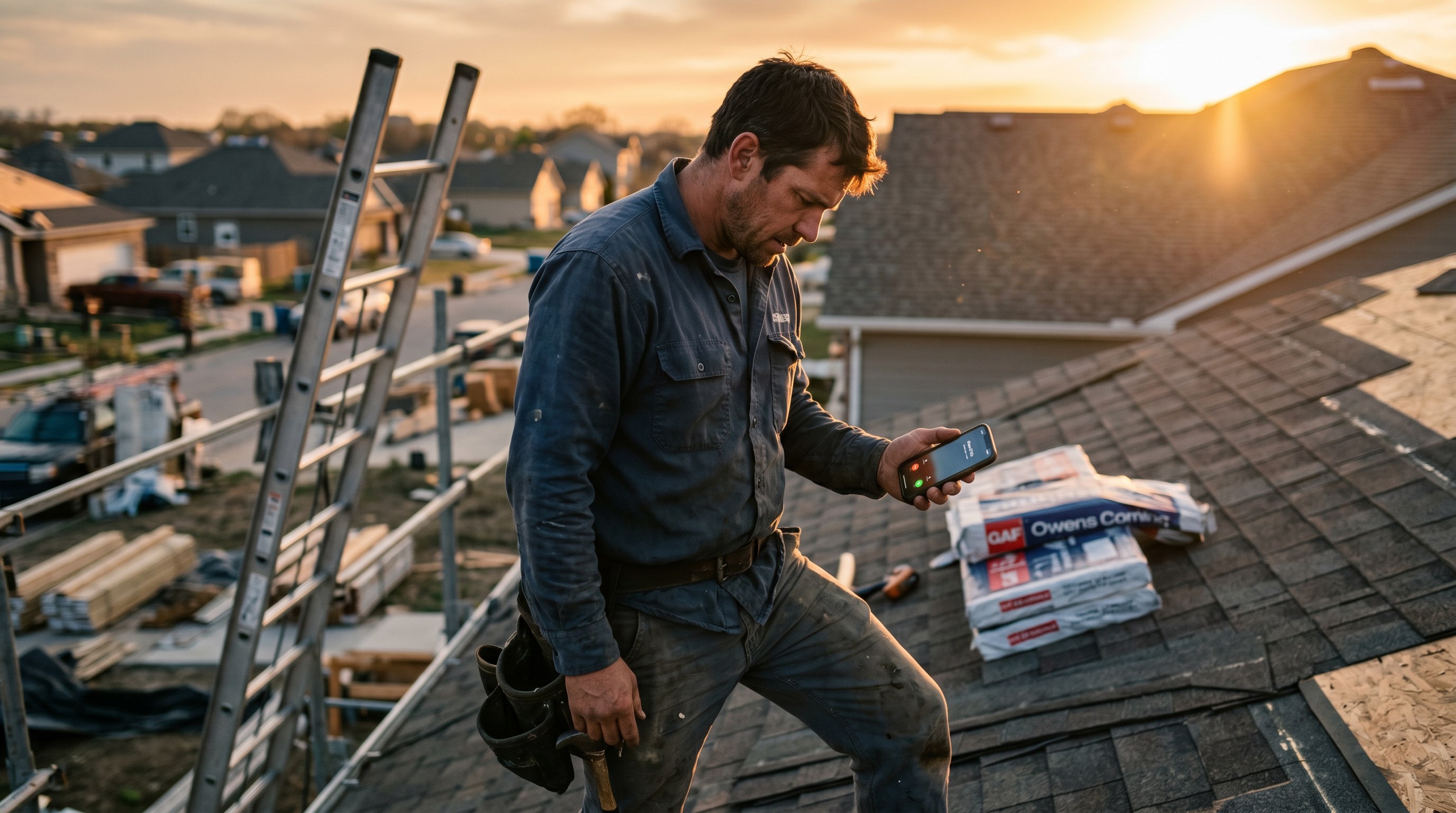
Now line that up against how contractors actually run. The form submission hits an email inbox. The owner is on a roof, under a sink, or driving between jobs. He sees the email at 6pm when he is finally off the truck. He calls back the next morning. That is an 18-hour response time on a lead that had a 5-minute window. The lead was real money and it is gone, and the painful part is he will never know it. There is no notification that says "you lost this job because you were slow." The lead just goes quiet and the contractor assumes it was a tire-kicker.
Multiply that across every lead that comes in, and slow response time is quietly the most expensive problem in the business. You are paying for the website, paying for the ads, paying for the SEO, generating the leads, and then losing a big share of them in the gap between the form submission and the callback.
Why Speed Beats Everything Else
There is a psychological reason the first caller wins, and it is worth understanding because it changes how you think about the whole funnel.
When a homeowner has an urgent problem, they are anxious and they want it handled. The first competent person who calls back relieves that anxiety. You become the person solving the problem instead of one of four names on a list. By the time competitor number two calls 40 minutes later, the homeowner is already half-committed to you, not because you were cheaper or better, but because you showed up first and made the problem feel handled.
Speed also signals reliability. A homeowner cannot evaluate the quality of your flashing work or your shingle install. They have no way to judge that. What they can judge, instantly, is whether you call back fast and show up when you say you will. Fast response is the first proof they get that you are not going to be a headache, and they extend that judgment to the actual work. Slow response signals the opposite, that you are disorganized and will be hard to reach once they have paid you.
This is also why your website matters more than most contractors think. If the site is slow, confusing, or the contact form is buried, you are adding friction before the lead even reaches you. We covered the warning signs of a site that is quietly costing you customers in 5 signs your business website is losing you customers. Speed to lead starts with how fast and easy it is to contact you in the first place.
What Actually Winning the 5-Minute Window Looks Like
Knowing the problem is easy. Here is how to actually close the gap, in order of effort.
1. Get the lead to your phone instantly, not your inbox
The first fix costs nothing. Every form submission and every missed call should hit your phone as a text message the second it comes in, not as an email you check later. Most form tools and CRMs can do this already. If a form fill sends you an SMS that says "New roof lead: John in Forked River, leaking roof, 732-555-0100," you can call back from the truck in 90 seconds. That one change, moving the alert from email to text, closes most of the gap by itself.
2. Auto-respond in the first 60 seconds while you get to the phone
You cannot always answer in 5 minutes. You are on a roof. So the next layer is an automatic first response that buys you time. The moment a lead comes in, an automated text goes out: "Hi John, this is Steve at Home Pro Roofing. Got your message about the leak, I'll call you within the hour. If it's an emergency, call or text this number." Now the homeowner has heard from you in 60 seconds even though you cannot talk yet. You have planted your flag before the competition has even seen the lead. This is exactly the kind of thing that small business automation is actually good for, the unglamorous response work that wins jobs while you are busy working.
3. Add an after-hours and overflow answer path
A large share of contractor leads come in evenings and weekends, exactly when nobody is in the office. The leak does not happen at 10am on a Tuesday. If those leads hit a dead inbox until Monday, you are handing your best emergency jobs to whoever does answer. The fix is either an answering service, a shared on-call phone, or an AI voice receptionist that captures the lead, gets the details, and texts you so you can triage. We went deep on that option in the AI voice receptionist for small business. The point is not the specific tool. The point is that the phone gets answered when the lead is hot.
4. Have a real callback discipline
The tech only matters if a human follows through. Decide the rule: every lead gets a live callback within an hour, full stop. Put it on whoever is best positioned to answer, even if that is not you. A lot of contractors would be better off having an office person or a spouse make the first contact in 5 minutes than waiting to do it themselves in 5 hours. The fastest competent contact wins. It does not have to be the owner.
This Is Cheaper Than More Leads
Here is the part most contractors miss. When jobs feel slow, the instinct is to spend more on ads and SEO to generate more leads. But if you are losing a big share of your current leads to slow response, more leads just means more leads to lose. You are pouring water into a bucket with a hole in it. And if those leads are bought leads shared with four other contractors, you are paying a premium to lose the race. We ran the full cost comparison in buy leads or build a website: the 2026 contractor math, and speed to lead is exactly why owned leads close so much higher than rented ones.
Fixing speed to lead is almost free and it raises the value of every lead you already generate and every dollar you already spend on marketing. It is the highest-return change available to most contractor businesses, and it is sitting right there. The website brings them in. The callback closes them. If the second part is broken, the first part is wasted.
We build contractor websites with the lead path wired correctly from the start: fast site, obvious contact options, instant text alerts on every form fill, and automation that responds in the first minute while you get to the phone. If your leads are landing in an inbox you check at the end of the day, that is a fixable problem and it is probably costing you more than anything else in the business. Get in touch and we will map out where your leads are leaking and how to plug it.